
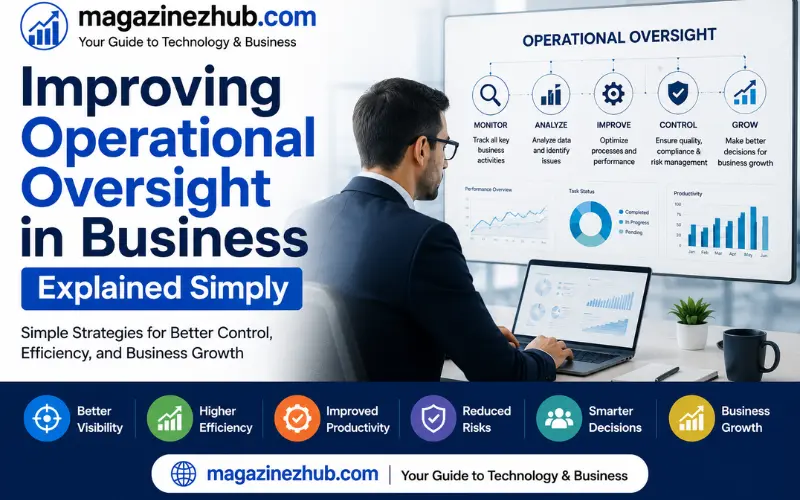
Many people search for “Improving Operational Oversight in Business” because companies today want better control over daily operations, employee performance, productivity, and business efficiency. In simple words, operational oversight means monitoring and managing business activities to ensure everything runs smoothly and effectively.
Businesses improve operational oversight to:
- increase productivity,
- reduce mistakes,
- improve communication,
- and support business growth.
Modern companies increasingly rely on:
- digital tools,
- management systems,
- automation,
- and data analysis
to improve operational performance.
In this complete guide, we will explain everything in simple words, including operational oversight, business management, productivity improvement, workflow optimization, technology solutions, and why strong oversight is important for long-term business success.
What Is Operational Oversight in Business?
Operational oversight refers to the process of monitoring, managing, and improving daily business operations.
It helps businesses:
- track performance,
- manage employees,
- improve workflows,
- and maintain efficiency.
Strong oversight ensures that company activities align with:
- business goals,
- customer expectations,
- and organizational standards.
Why Operational Oversight Is Important
Operational oversight is important because businesses need organized systems to:
- avoid errors,
- improve efficiency,
- and maintain productivity.
Without proper oversight, companies may face:
- communication problems,
- delayed projects,
- and financial losses.
Good oversight helps businesses:
- operate smoothly,
- reduce risks,
- and improve decision-making.
How Businesses Improve Operational Oversight
Businesses improve operational oversight by:
- using management software,
- monitoring workflows,
- improving communication,
- and analyzing performance data.
Modern organizations often combine:
- technology,
- leadership,
- and strategic planning
to improve operational efficiency.
Why Business Efficiency Matters
Business efficiency helps companies:
- save time,
- reduce costs,
- and improve productivity.
Efficient systems allow employees to:
- complete tasks faster,
- communicate better,
- and avoid unnecessary delays.
Operational oversight plays a major role in improving efficiency.
What Is Workflow Management?
Workflow management involves organizing and tracking business processes.
It helps businesses:
- assign tasks,
- monitor progress,
- and improve coordination.
Modern workflow systems often use:
- automation tools,
- dashboards,
- and digital tracking software.
Good workflow management improves overall operations.
Why Communication Is Important in Operations
Strong communication helps businesses:
- avoid misunderstandings,
- improve teamwork,
- and increase productivity.
Companies often use:
- messaging platforms,
- project management tools,
- and virtual meetings
to improve communication between departments.
Clear communication improves operational oversight significantly.
Why Data Analysis Helps Businesses
Data analysis helps companies:
- track performance,
- identify problems,
- and improve decision-making.
Businesses often analyze:
- sales performance,
- employee productivity,
- and customer behavior.
Data-driven insights help organizations improve operations more effectively.
Why Technology Improved Business Oversight
Technology transformed modern business management.
Companies now use:
- cloud systems,
- automation tools,
- AI software,
- and digital dashboards
to monitor operations efficiently.
Technology helps businesses:
- reduce manual work,
- improve accuracy,
- and increase productivity.
Why Automation Became Important
Automation helps businesses:
- save time,
- reduce repetitive tasks,
- and improve operational efficiency.
Modern businesses automate:
- scheduling,
- reporting,
- customer support,
- and workflow management.
Automation became one of the fastest-growing trends in business operations.
Why Leadership Matters in Operational Oversight
Strong leadership helps businesses:
- guide employees,
- improve accountability,
- and maintain operational standards.
Managers often monitor:
- team performance,
- workflow efficiency,
- and business objectives.
Effective leadership improves organizational success.
Why Employee Performance Tracking Is Important
Employee performance tracking helps companies:
- measure productivity,
- identify strengths,
- and improve training.
Businesses often use:
- performance reviews,
- analytics tools,
- and management software
to monitor employee progress.
Better performance tracking improves operational oversight.
Why Customer Satisfaction Matters
Customer satisfaction strongly affects:
- business reputation,
- customer loyalty,
- and long-term success.
Operational oversight helps businesses:
- respond faster,
- improve service quality,
- and reduce customer complaints.
Companies with efficient operations often provide better customer experiences.
Why Risk Management Is Important
Risk management helps businesses:
- prevent operational problems,
- reduce financial losses,
- and improve stability.
Companies often monitor:
- cybersecurity,
- compliance,
- and workflow risks.
Good oversight helps businesses identify and solve problems early.
Why Cloud Technology Supports Business Operations
Cloud technology allows businesses to:
- access information remotely,
- improve collaboration,
- and store data securely.
Many organizations now use:
- cloud-based management systems,
- online dashboards,
- and remote communication tools.
Cloud systems improved flexibility and operational efficiency.
Why Small Businesses Need Operational Oversight
Small businesses need operational oversight to:
- manage growth,
- improve organization,
- and reduce inefficiency.
Even small teams benefit from:
- task tracking,
- workflow management,
- and communication systems.
Good operational practices help businesses scale successfully.
Why Remote Work Changed Business Operations
Remote work transformed how companies manage employees and workflows.
Businesses now use:
- virtual collaboration tools,
- cloud software,
- and remote monitoring systems.
Operational oversight became more important because teams often work from different locations.
Why Project Management Software Became Popular
Project management software helps businesses:
- organize tasks,
- track deadlines,
- and improve teamwork.
Popular systems often include:
- task boards,
- scheduling tools,
- and reporting features.
These tools improve operational visibility and efficiency.
Why AI Is Used in Business Operations
Artificial intelligence helps businesses improve:
- automation,
- forecasting,
- and operational analysis.
AI systems can:
- identify trends,
- automate repetitive work,
- and improve decision-making.
Modern businesses increasingly depend on smart technologies.
Why Time Management Improves Productivity
Time management helps businesses:
- complete projects faster,
- reduce delays,
- and improve workflow efficiency.
Companies often use:
- scheduling tools,
- calendars,
- and automation systems
to improve time management.
Efficient time usage supports operational success.
Why Financial Oversight Is Important
Financial oversight helps businesses:
- control expenses,
- monitor budgets,
- and improve profitability.
Operational oversight often includes:
- expense tracking,
- financial reporting,
- and performance monitoring.
Strong financial management improves business stability.
Why Compliance Matters in Business
Compliance helps businesses follow:
- legal regulations,
- company policies,
- and industry standards.
Organizations often monitor compliance to:
- reduce risks,
- avoid penalties,
- and maintain professional operations.
Operational oversight supports compliance management.
Why Employee Training Is Important
Employee training helps teams:
- improve skills,
- understand workflows,
- and increase productivity.
Businesses often provide training for:
- technology systems,
- communication,
- and operational procedures.
Well-trained employees improve business efficiency.
Why Real-Time Monitoring Helps Businesses
Real-time monitoring allows companies to:
- track operations instantly,
- solve issues quickly,
- and improve productivity.
Modern dashboards often provide:
- live reports,
- workflow updates,
- and performance analytics.
Real-time oversight improves operational control.
Why Business Analytics Became Essential
Business analytics helps companies:
- understand performance,
- identify trends,
- and improve strategies.
Organizations use analytics for:
- operational planning,
- customer insights,
- and productivity improvement.
Data became one of the most valuable business resources.
Why Scalability Is Important
Scalability allows businesses to:
- expand operations,
- handle growth,
- and improve efficiency.
Operational oversight systems help companies scale without losing control over workflows and productivity.
Growing businesses need strong operational structures.
Why Cybersecurity Is Important in Operations
Businesses increasingly rely on digital systems, making cybersecurity highly important.
Companies protect:
- sensitive data,
- communication systems,
- and operational software.
Cybersecurity helps reduce:
- data breaches,
- operational disruptions,
- and digital risks.
Why Businesses Focus on Continuous Improvement
Continuous improvement helps organizations:
- optimize operations,
- increase efficiency,
- and remain competitive.
Businesses often review:
- workflows,
- employee performance,
- and customer feedback
to improve operations continuously.
Strong oversight supports long-term growth.
Common Challenges in Operational Oversight
Businesses may face challenges such as:
- communication gaps,
- workflow inefficiencies,
- and lack of visibility.
Poor oversight can lead to:
- delays,
- mistakes,
- and reduced productivity.
Modern technology helps businesses solve many operational challenges.
Tips for Improving Operational Oversight
Businesses can improve oversight by:
- using management software,
- improving communication,
- automating repetitive tasks,
- and monitoring performance regularly.
Strong leadership and clear workflows also improve operational efficiency.
Consistent improvement helps businesses stay competitive.
Why Operational Oversight Will Become More Important
As businesses continue adopting:
- automation,
- AI technology,
- and remote work systems,
operational oversight will become even more important.
Companies increasingly need:
- better visibility,
- faster decision-making,
- and efficient workflows.
Modern business success strongly depends on operational efficiency.
See Also: Find a Reliable Wholesale Hair Vendor for Your Business
FAQs
What is operational oversight in business?
It is the process of monitoring and improving daily business operations.
Why is operational oversight important?
It helps businesses improve productivity, efficiency, and organization.
How can businesses improve operational oversight?
They can use technology, automation, communication tools, and analytics.
Why is workflow management important?
It helps businesses organize tasks and improve efficiency.
Why do companies use automation?
Automation saves time and improves operational productivity.
Conclusion
“Improving Operational Oversight in Business” became highly important because modern organizations increasingly depend on technology, productivity systems, and efficient workflows. Businesses improve oversight to:
- increase efficiency,
- reduce mistakes,
- and support long-term growth.
As digital transformation continues worldwide, operational oversight will remain essential for businesses of all sizes. Whether someone searches this keyword because of management learning, business improvement, or operational strategy, understanding oversight systems can help organizations achieve better productivity, stronger communication, and improved business success in today’s competitive market.
