
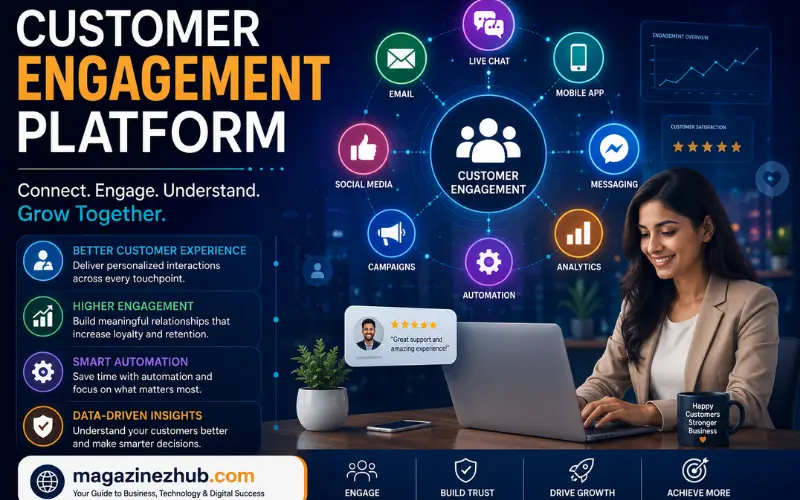
Many people search for Customer Engagement Platform because businesses today want stronger relationships with customers instead of simply making one-time sales. In simple words, a customer engagement platform is a system that helps businesses communicate, understand, support, and interact with customers across multiple channels. It helps companies create better experiences and build long-term relationships.
Modern businesses operate in a highly competitive environment. Customers have many choices, and because of this, businesses increasingly focus on customer satisfaction and engagement. Companies now understand that attracting a customer is important, but keeping that customer interested and connected is even more valuable.
Years ago, many businesses communicated mainly through phone calls and physical interactions. Today, technology has changed everything. Businesses now connect with customers through websites, emails, mobile apps, social media, live chats, messaging systems, and personalized experiences.
In this complete beginner-friendly guide, we will explain everything in simple words including what customer engagement platforms are, how they work, their benefits, important features, future trends, challenges, and why businesses increasingly depend on them.
What Is a Customer Engagement Platform?
A customer engagement platform is a system designed to help businesses communicate and interact with customers throughout their journey.
It commonly helps businesses manage:
- customer communication
- personalized messaging
- support systems
- customer data
- feedback collection
- engagement activities
Instead of using many separate tools, businesses often prefer a single platform that brings customer activities together.
Why Customer Engagement Is Important
Customer engagement has become one of the most important factors for business growth.
Strong customer engagement may help businesses:
Improve Customer Satisfaction
Satisfied customers often create better experiences.
Build Customer Loyalty
Customers frequently return when they feel valued.
Increase Customer Retention
Retaining customers may cost less than finding new customers.
Strengthen Brand Reputation
Positive experiences often improve business reputation.
Businesses increasingly focus on long-term relationships rather than short-term sales.
How Customer Engagement Platforms Work
Customer engagement platforms generally collect customer information and help businesses create better communication strategies.
The process may involve:
Collecting Customer Data
Platforms often gather information from different channels.
Understanding Customer Behavior
Businesses can analyze how customers interact.
Personalizing Experiences
Platforms may help create customized communication.
Measuring Results
Businesses can monitor customer interactions and engagement levels.
Major Features of Customer Engagement Platforms
Most customer engagement systems include multiple useful features.
Common features include:
Email Communication
Businesses can connect with customers through email.
Live Chat Support
Real-time communication often improves experiences.
Customer Analytics
Businesses can better understand customer behavior.
Social Media Integration
Companies can manage customer interactions across social channels.
Automated Messaging
Automation can improve efficiency.
Personalized Recommendations
Customers increasingly prefer personalized experiences.
Why Personalization Matters
Personalization has become one of the strongest trends in modern business.
Personalization may include:
- personalized offers
- product suggestions
- customized emails
- behavior-based recommendations
- unique experiences
Customers often respond positively to relevant content.
Benefits of Using Customer Engagement Platforms
Businesses often use engagement systems because they provide multiple advantages.
Benefits include:
Better Customer Relationships
Stronger communication can improve trust.
Increased Sales Opportunities
Satisfied customers may purchase more products.
Higher Customer Retention
Long-term customers often support business growth.
Better Customer Understanding
Businesses can make informed decisions.
Improved Productivity
Automation can reduce repetitive work.
Why Businesses Focus on Customer Retention
Many companies understand that retaining customers is important.
Reasons include:
reduced marketing costs
repeat customers
stronger relationships
increased trust
long-term growth
Customer retention often supports profitability.
Types of Customer Engagement Platforms
Different businesses often use different types of customer engagement systems depending on their goals.
Common types include:
Email Engagement Platforms
These platforms focus on customer communication through email campaigns and newsletters.
Social Media Engagement Platforms
Businesses use these tools to interact with customers across social channels.
Mobile Engagement Platforms
Mobile platforms help businesses connect with users through applications and notifications.
Omnichannel Platforms
These systems combine multiple communication channels into one place.
Businesses usually select platforms based on customer needs and communication strategies.
Communication Channels Used in Customer Engagement
Modern businesses communicate through many channels.
Examples include:
- social media
- websites
- mobile applications
- live chat
- messaging systems
Customers increasingly expect businesses to provide multiple communication options.
Role of Artificial Intelligence in Customer Engagement
Artificial intelligence continues changing customer interactions.
AI may support:
Chatbots
Automated responses can improve support speed.
Personalized Suggestions
Businesses may recommend relevant products.
Customer Predictions
Systems can analyze customer behavior patterns.
Faster Support Systems
AI can improve response efficiency.
Technology continues improving customer experiences.
Why Data Matters in Customer Engagement
Data helps businesses understand customers better.
Useful customer data may include:
- purchase history
- browsing activity
- customer interests
- interaction behavior
- feedback patterns
Good information may support smarter decisions.
Common Challenges Businesses Face
Businesses may encounter several challenges.
Examples include:
Managing Large Amounts of Data
Information can become difficult to organize.
Customer Expectations
Customers increasingly expect fast responses.
Privacy Concerns
Businesses must protect customer information.
Communication Consistency
Maintaining quality across channels can be challenging.
Understanding challenges helps businesses improve strategies.
Why Omnichannel Communication Is Becoming Important
Modern customers use many communication methods throughout the day.
Customers may switch between:
- websites
- emails
- social media
- mobile applications
- live chat systems
- messaging platforms
Omnichannel experiences help businesses provide smoother communication without creating confusion.
Customers increasingly expect consistent experiences across every channel.
How Customer Engagement Platforms Help Increase Sales
Many businesses focus on customer engagement because it may influence purchasing behavior.
Platforms may help increase sales by:
Sending Personalized Recommendations
Customers often respond better to relevant suggestions.
Reducing Customer Friction
Easy experiences may improve buying decisions.
Improving Customer Relationships
Trust frequently supports future purchases.
Supporting Repeat Customers
Existing customers often purchase again.
Better engagement frequently creates stronger business growth opportunities.
Importance of Real-Time Customer Communication
Modern users increasingly expect quick responses.
Real-time communication may improve:
✔ customer satisfaction
✔ response speed
✔ trust levels
✔ customer experiences
✔ engagement rates
Fast communication often creates better customer relationships.
How Customer Engagement Platforms Support Marketing Teams
Marketing teams increasingly use engagement platforms to understand audiences better.
Platforms may help marketers through:
- audience insights
- campaign management
- customer behavior tracking
- personalization systems
- performance analysis
Understanding customers often improves marketing strategies.
Why Customer Journey Mapping Matters
Customer journey mapping helps businesses understand how customers interact throughout different stages.
Customer journeys may include:
Discovery Stage
Customers first learn about products or services.
Research Stage
Users compare information before making decisions.
Purchase Stage
Customers complete transactions.
Post-Purchase Stage
Businesses continue maintaining relationships after purchases.
knowing customer journeys may improve engagement strategies.
Security and Privacy in Customer Engagement Platforms
Customer information has become increasingly valuable.
Businesses often focus on:
- protecting customer data
- improving security systems
- maintaining customer trust
- responsible data handling
- privacy compliance
Strong security practices often improve customer confidence.
Future of Customer Engagement Platforms
Customer engagement technology will likely continue evolving.
Future developments may include:
Advanced Artificial Intelligence
Systems may become more intelligent.
Predictive Customer Insights
Businesses may understand customer behavior earlier.
Hyper-Personalization
Experiences may become highly customized.
Smarter Automation
Automated systems may improve efficiency.
The future of customer engagement may focus heavily on personalization and better experiences.
How Small Businesses Can Benefit
Customer engagement platforms are not only for large companies.
Small businesses may benefit through:
- better customer communication
- stronger relationships
- improved efficiency
- easier management
- business growth opportunities
Technology has made advanced tools more accessible.
How Customer Engagement Helps Brand Growth
Strong engagement often creates stronger brands.
Engaged customers may:
- recommend businesses
- share experiences
- become loyal customers
- increase visibility
- improve reputation
Positive experiences often support growth.
Future Trends in Customer Engagement Platforms
Future developments may include:
Smarter AI Systems
Artificial intelligence may continue improving.
Better Personalization
Experiences may become increasingly customized.
Omnichannel Experiences
Businesses may connect channels more effectively.
Advanced Analytics
Businesses may receive deeper insights.
Automation Growth
Automated systems may become more intelligent.
Why Mobile Experiences Matter
Large numbers of customers interact through smartphones.
Mobile-friendly experiences may provide:
- easier accessibility
- faster communication
- convenience
- better engagement
- improved experiences
Mobile systems continue growing worldwide.
How Customer Feedback Improves Businesses
Customer feedback helps businesses understand performance.
Feedback may reveal:
Customer Satisfaction
Businesses can identify strengths.
Improvement Areas
Weak points may become easier to identify.
Future Opportunities
Suggestions sometimes inspire innovation.
Listening to customers often improves business strategies.
See Also: The Future of Small Businesses Explained Simply
FAQs
What is a customer engagement platform?
It is a system that helps businesses communicate and interact with customers across multiple channels.
Why is customer engagement important?
Customer engagement helps improve relationships, loyalty, and customer retention.
Do small businesses need engagement platforms?
Yes. Small businesses may benefit from better communication and stronger customer relationships.
How does AI affect customer engagement?
AI can improve personalization, support systems, and customer insights.
Conclusion
Customer engagement platforms continue becoming important in modern business environments. Businesses increasingly focus on creating meaningful relationships instead of simply completing sales. Strong communication, personalized experiences, and customer satisfaction frequently influence long-term success.
As technology continues evolving, customer engagement platforms may become smarter, faster, and more personalized, helping businesses create better experiences and stronger customer connections.
